


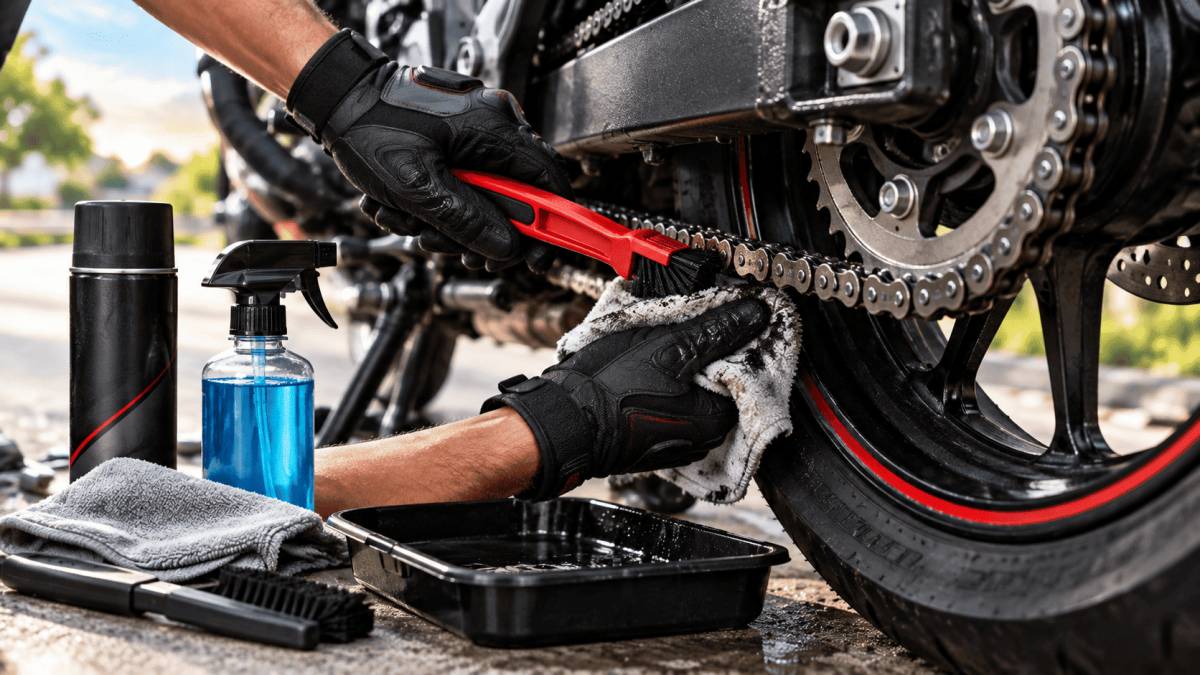
A motorcycle chain is one of the most important parts of a bike’s final drive system. It transfers power from the engine and transmission to the rear wheel. Because the chain is exposed to dust, dirt, water, and road debris, regular cleaning, lubrication, and inspection are important for maintaining the chain and sprockets.
For daily riders in Bangladesh, where motorcycles may regularly encounter dust, rain, muddy roads, and wet conditions, proper chain maintenance can be especially useful. This guide explains how to clean and maintain a motorcycle chain safely and correctly.
Why Is Motorcycle Chain Maintenance Important?
A motorcycle chain is a wear item, so it will eventually need replacement. However, proper maintenance can help reduce unnecessary wear and keep the chain system operating properly.
According to chain manufacturers such as D.I.D and RK, regular cleaning and lubrication are important parts of chain maintenance. Dirt and debris can contribute to chain wear, while inadequate lubrication can increase friction and corrosion.
Regular maintenance also gives riders an opportunity to notice problems such as:
- Rust or corrosion
- Stiff or kinked links
- Damaged or missing O-rings/X-rings
- Excessive chain slack or elongation
- Unusual chain noise
- Worn or damaged sprocket teeth
What Do You Need to Clean a Motorcycle Chain?
Before starting, prepare the necessary tools and products:
- Motorcycle chain cleaner that is suitable for your chain
- Soft cloth or microfiber cloth
- Soft chain-cleaning brush if recommended for your chain
- Motorcycle-specific chain lubricant
- Gloves
- Rear paddock stand or suitable method to safely rotate the rear wheel, if available
For sealed O-ring or X-ring chains, use a cleaner specifically marked as safe for the chain seals. D.I.D recommends an O-ring/X-ring-safe cleaner and lubricant.
Step 1: Let the Motorcycle Cool Down
Before cleaning, park the motorcycle on a stable surface and allow hot components to cool.
Make sure the motorcycle cannot move unexpectedly while you are working around the chain and rear wheel.
Step 2: Inspect the Chain Before Cleaning
Take a quick look at the entire chain.
Check for:
- Excessive dirt buildup
- Rust
- Kinked or stiff links
- Damaged seals
- Abnormal wear
- Excessive elongation
D.I.D notes that rust, stiffness, missing seals, excessive elongation, or abnormal noise can indicate that a chain needs attention or replacement.
Step 3: Apply a Suitable Chain Cleaner
Apply a motorcycle chain cleaner according to the product instructions.
For sealed chains, avoid cleaners or chemicals that can damage the rubber seals. RK specifically warns against brake cleaner, caustic chemicals, and aggressive cleaning methods for motorcycle chains.
Do not assume that every household cleaner or solvent is safe for a motorcycle chain.
Step 4: Remove Dirt With a Soft Cloth or Suitable Brush
Gently remove dirt and old lubricant from the chain using a soft cloth.
If your chain manufacturer permits brushing, use an appropriate soft chain brush. Avoid wire brushes or hard bristles on sealed chains because they can damage the seals.
Also avoid using a pressure washer or steam directly on the chain. RK warns that high-pressure water and steam can contaminate the chain's internal lubrication and contribute to premature wear.
Step 5: Dry the Chain
After cleaning, allow the chain to dry completely or wipe it thoroughly with a clean cloth.
D.I.D recommends drying the chain after cleaning to help prevent surface rust.
Step 6: Lubricate the Motorcycle Chain
Once the chain is clean and dry, apply a quality motorcycle chain lubricant.
For O-ring or X-ring chains, choose a lubricant that is specifically compatible with sealed chains. Apply the lubricant evenly while rotating the rear wheel safely, following the lubricant manufacturer's instructions.
Avoid applying excessive lubricant. Too much can attract additional dirt and create unnecessary mess around the rear wheel.
How Often Should You Clean and Lubricate a Motorcycle Chain?
There is no single interval that works for every motorcycle. The correct schedule depends on the motorcycle, chain type, riding conditions, and the chain manufacturer's recommendations.
As a reference, D.I.D recommends cleaning a chain every 300 miles (about 500 km) and lubricating it regularly, while RK gives different intervals depending on whether the chain is sealed or non-sealed.
If you frequently ride through rain, mud, dusty roads, or other harsh conditions, inspect the chain more frequently and follow your motorcycle and chain manufacturer's recommendations.
Common Motorcycle Chain Maintenance Mistakes
Avoid these common mistakes:
Using the Wrong Cleaner
Some chemicals can damage chain seals. Always check whether the cleaner is suitable for your particular chain.
Using a Wire Brush
A hard or wire brush can damage O-rings or X-rings on sealed chains.
Using High-Pressure Water
Pressure washing the chain can force contaminants or water into areas where they should not go.
Ignoring Chain Slack
Cleaning and lubrication are not enough. Chain slack should also be checked and adjusted according to the motorcycle manufacturer's specification.
Ignoring the Sprockets
The chain and sprockets work together. D.I.D recommends checking the complete chain system and replacing worn sprockets when necessary.
When Should You Replace a Motorcycle Chain?
Cleaning cannot repair a worn or damaged chain.
Consider professional inspection or replacement if you notice:
- Damaged or missing O-rings/X-rings
- Severe rust
- Stiff or kinked links
- Excessive elongation
- Abnormal chain noise
- Serious wear on the sprockets
- Other visible damage
The exact replacement criteria should come from your motorcycle and chain manufacturer's specifications. D.I.D states that excessive elongation, rust, stiffness, and damaged seals can indicate a chain that needs replacement.
Final Thoughts
Knowing how to clean and maintain a motorcycle chain is an important part of regular motorcycle maintenance. A simple routine of inspection, suitable cleaning, proper drying, and correct lubrication can help keep the chain system in better condition.
Always use products compatible with your specific chain, especially if your motorcycle uses an O-ring or X-ring sealed chain. Most importantly, follow the motorcycle and chain manufacturer's maintenance specifications rather than relying on a one-size-fits-all schedule.






একটি মন্তব্য করুন
এই নিবন্ধে মন্তব্য করতে অনুগ্রহ করে গ্রাহক বা ডিলার হিসেবে লগইন করুন।
লগইন করুন