


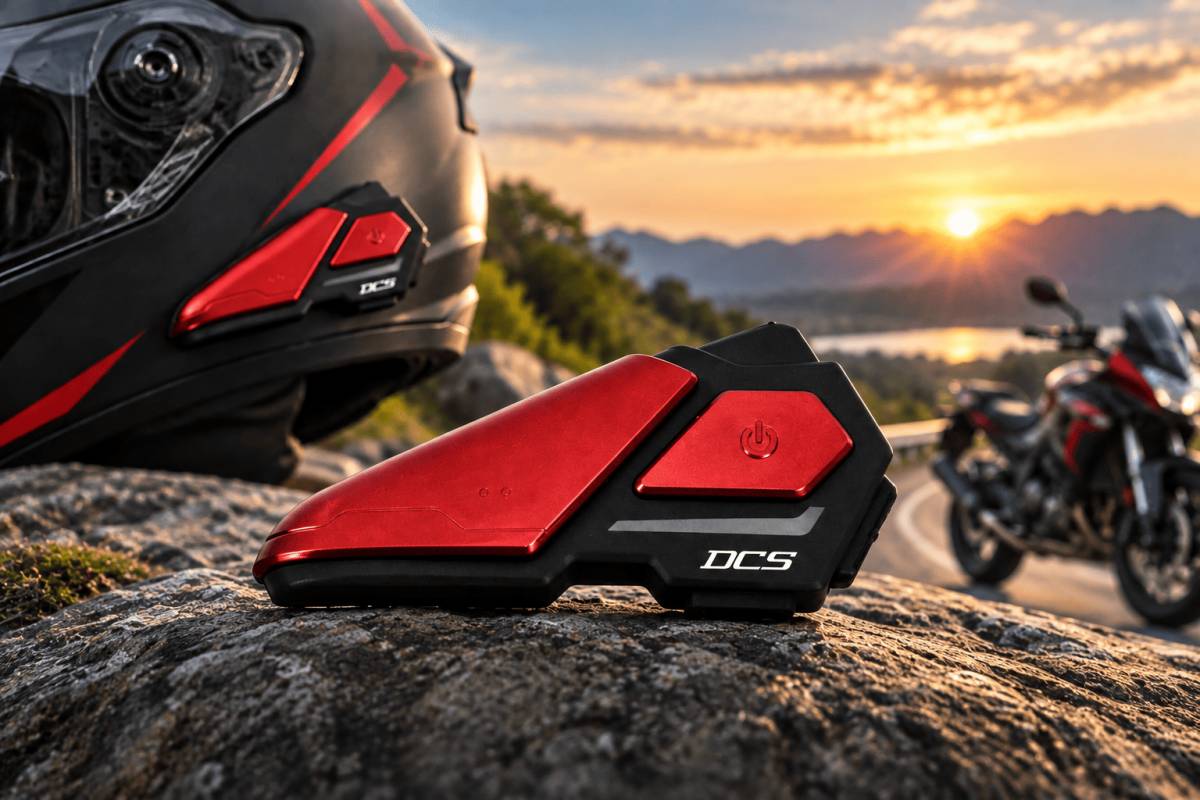
Motorcycle riding becomes more convenient when riders can communicate without taking their hands off the handlebars. This is where a motorcycle intercom can be useful.
A motorcycle intercom is a communication device designed to work with a helmet. Depending on the model, it can allow rider-to-rider or rider-to-passenger communication, phone calls, GPS audio and music. Bluetooth and mesh-based systems are commonly used for motorcycle communication.
For riders in Bangladesh who regularly commute, travel on highways or ride in groups, an intercom can make communication easier. However, it is important to use it responsibly because conversations, music and navigation audio can also become distractions if they reduce attention to the road.
What Is a Motorcycle Intercom?
A motorcycle intercom is a small communication system that is installed on or inside a motorcycle helmet. It normally uses speakers and a microphone so riders can communicate while riding.
Depending on the model, an intercom may support:
- Rider-to-rider communication
- Rider-to-passenger communication
- Bluetooth connectivity
- Phone calls
- GPS navigation audio
- Music
- Group communication
- Noise-reduction features
The exact features vary between models, so riders should check the specifications before purchasing.
Defend Consortium currently offers several motorcycle intercom and Bluetooth headset options, including the Q08 MAX, Y13 Pro, Y10, K8+ and DC32 Meshtech models.
Why Do Bikers Need a Motorcycle Intercom?
1. Easier Communication During Group Rides
One of the biggest reasons riders use an intercom is communication during group rides.
When several motorcycles are travelling together, riders may need to communicate about:
- Road conditions
- Stops
- Turns
- Fuel breaks
- Traffic
- Changes in the riding group
Using an intercom means riders do not always need to stop or rely on hand signals for basic communication.
For group touring, some systems support communication between multiple riders. The number of riders and communication range depend on the specific technology and model.
2. Communication With a Passenger
An intercom can also be useful when carrying a passenger.
Instead of turning around or trying to communicate through wind noise, the rider and passenger can speak through their helmet speakers and microphones.
This can be particularly convenient on longer rides where frequent communication may be necessary.
3. GPS Navigation Without Looking at the Phone
Many motorcycle intercoms can connect to a smartphone and provide audio from navigation applications.
This can help a rider receive turn-by-turn instructions without repeatedly looking at a phone screen.
However, riders should set the route before starting whenever possible. Motorcycle safety guidance notes that GPS can become a distraction when riders interact with it while riding.
4. Hands-Free Phone Calls
Some helmet intercoms support Bluetooth phone calls.
This can be convenient when a rider needs to receive an important call. However, riders should remember that a hands-free call is not automatically distraction-free.
The safest approach is to keep attention focused on riding and avoid unnecessary conversations in complicated traffic situations.
5. Useful for Long-Distance Touring
Intercoms can be particularly convenient for riders who regularly travel long distances.
During highway or touring rides, communication can help riders coordinate stops, directions and group movements without repeatedly stopping the motorcycles.
For Bangladesh riders travelling between cities or touring areas such as Chattogram, Sylhet, Cox's Bazar or hill regions, communication can be a useful convenience.
However, an intercom should be considered a communication accessory, not a safety guarantee.
Does a Motorcycle Intercom Make Riding Safer?
This needs an important clarification.
A motorcycle intercom itself does not guarantee safer riding.
Good communication may help riders coordinate, but conversations, music, GPS instructions and other audio can also distract a rider. The Société de l'assurance automobile du Québec (SAAQ) specifically warns that communication systems may impair concentration and that riders should remain vigilant while using them.
Therefore, riders should:
- Keep the volume at a reasonable level.
- Avoid unnecessary conversations in difficult traffic.
- Do not operate the phone while riding.
- Set GPS routes before riding when possible.
- Keep attention on traffic and road conditions.
- Follow local traffic laws.
What Should You Check Before Buying a Motorcycle Intercom?
Before purchasing an intercom, consider the features that match your riding needs.
Communication Type
Check whether the device supports Bluetooth intercom, mesh communication or another communication system.
Number of Riders
If you frequently ride in groups, check how many riders the particular model supports.
Communication Range
Do not assume that the advertised range will always be achieved on the road. Buildings, terrain, traffic and other environmental conditions can affect communication.
Battery Life
For long-distance riders, battery capacity and expected operating time are important considerations.
Helmet Compatibility
Check whether the intercom is suitable for your helmet type and whether the speakers and microphone can be installed comfortably.
Water Resistance
If you ride during Bangladesh's rainy season, check the manufacturer's stated water-resistance rating rather than assuming every intercom is waterproof.
For example, Defend Consortium lists the Y13 Pro as having an IP56 dustproof and waterproof design, while its N3X product is listed with an IPX6 rating. These specifications are product-specific and should not be applied to every intercom.
Is a Motorcycle Intercom Worth It for Daily Riders?
For riders who frequently travel alone and rarely need calls, group communication or navigation audio, an intercom may not be essential.
But for group riders, touring riders and riders who regularly carry passengers, it can be a useful accessory.
The main benefit is convenience: it allows communication and audio functions to be integrated into the helmet without requiring the rider to hold a phone.
Final Thoughts
A motorcycle intercom can make riding more convenient by providing communication between riders and passengers, GPS audio, phone connectivity and, depending on the model, group communication.
For riders in Bangladesh, an intercom can be particularly useful during group rides and long-distance touring. But it should never be treated as a replacement for safe riding practices.
When choosing one, focus on communication type, rider capacity, range, battery life, helmet compatibility, controls and verified water-resistance specifications.
Most importantly, use the intercom in a way that keeps your attention on the road. A useful communication device should support your ride—not become another source of distraction.



একটি মন্তব্য করুন
এই নিবন্ধে মন্তব্য করতে অনুগ্রহ করে গ্রাহক বা ডিলার হিসেবে লগইন করুন।
লগইন করুন